Qiqikof is released and ordered to leave the city
Dead SoulsChichikov’s release and compulsory departure mark a turn from prison and bribery toward an uncertain road out of town. Granted freedom through Murazov’s intervention, he is ordered to leave at once; as he prepares to go, the old man’s warning about corruption and spiritual life briefly makes the gravity of his predicament visible, even as Chichikov continues to attend to his clothes and appearance. His exit brings no clear renewal: he leaves materially equipped for travel but inwardly diminished, described as a ruin awaiting plans for a replacement.
The Condition of Freedom
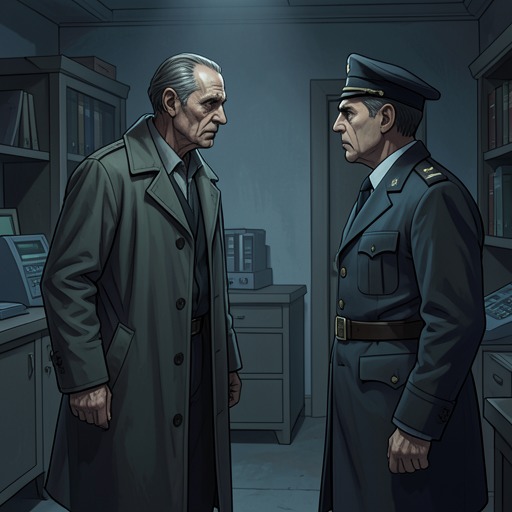
Murazov proposes that the Prince order Chichikov out of town, and the Prince accepts. The pardon is therefore neither unconditional nor a public restoration: Chichikov must depart as quickly as possible, and the farther away he goes, the better it will be for him. The Prince also stipulates that Murazov tell him his freedom is due only to Murazov’s efforts. Release is presented as a reprieve tied to immediate exile, not as vindication.
Murazov goes directly from the Prince to the prisoner. He finds Chichikov cheerfully eating a hearty dinner delivered under hot covers from an excellent kitchen. That comfortable scene makes the moral warning that follows more pointed: Murazov recognizes that Chichikov has been dealing with the network of bribe-takers and that his lawyer has played the leading part in those dealings. The apparent ease of the meal sits beside the danger of a conspiracy whose exposure, Murazov says, could bring down the lawyer and others involved.
Murazov’s Warning
Murazov tells Chichikov to gather his effects and waste no time. He makes clear that he knows what a certain person has attempted on Chichikov’s behalf and warns that, if the conspiracy is uncovered, no one will be able to save that person; the man may implicate others rather than bear the guilt alone. The pardon thus arrives with a practical urgency: delay would expose Chichikov to dangers that his temporary freedom cannot remove.
The warning also reaches beyond immediate self-preservation. Murazov recalls that Chichikov had seemed in a better frame of mind during their previous meeting, then asks him to reconsider the pursuit of wealth and the trade in dead souls. Temporal goods, he argues, cannot rest on a sound foundation while a person ignores spiritual wealth; the body cannot dispense with the soul. He urges Chichikov to stop thinking about dead souls and recover the better road by attending to his own living soul. Murazov himself is leaving the following day, so his appeal is paired with a final warning that Chichikov may face misfortune without his help.
From Prison to the Road
After Murazov leaves, Chichikov is plunged in thought, and the gravity of life once more begins to loom before him. He acknowledges to himself that Murazov was right and that it is time to move. The scene gives the release an inward consequence, but does not show a settled conversion: reflection accompanies the decision to depart rather than replacing it with a demonstrated change of conduct.
A warder carries Chichikov’s effects as he leaves prison. Outside, Selifan and Petrushka are overjoyed to see their master at liberty. Chichikov speaks kindly to them and says they must pack and be off. Selifan agrees, noting that much snow has fallen and the roads will have become firmer; he, too, is weary of the town and says that even looking at it hurts his eyes. Their exchange turns the order to leave into immediate travel preparations, shaped by the winter roads as well as by the threat hanging over their master.
Chichikov tells Selifan to go to the coachbuilder and have sledge-runners fitted to the koliaska. The practical alteration prepares the carriage for the snow-covered route. The party does not simply walk out of prison and disappear: departure requires the servants, luggage, vehicle, and road conditions to be brought into readiness.
The Last Purchase and Departure
Chichikov makes one discreet call in town, not to say farewell to acquaintances—recent events might make such visits awkward—but to return to the shop where he bought the cloth for his latest suit. He purchases four more arshins of the same smoked-grey material shot with flame colour, intending to have it made up by the tailor who fashioned the previous costume. By promising double payment, he persuades the tailor to work through the night so the garments will be ready by daybreak. They arrive a little later than promised, but the coat and breeches are completed the following morning while the horses are being put to.
He tries on the new clothes before leaving and finds them as good as the earlier suit. Yet the fitting also exposes a bald patch, prompting a rueful thought that he had torn out too much of his hair in despair. The episode sets the exacting maintenance of his appearance against the crisis that has brought him from prison: even under orders to flee, he spends money and effort on another carefully matched outfit, while the visible mark of his distress interrupts the satisfaction of the purchase.
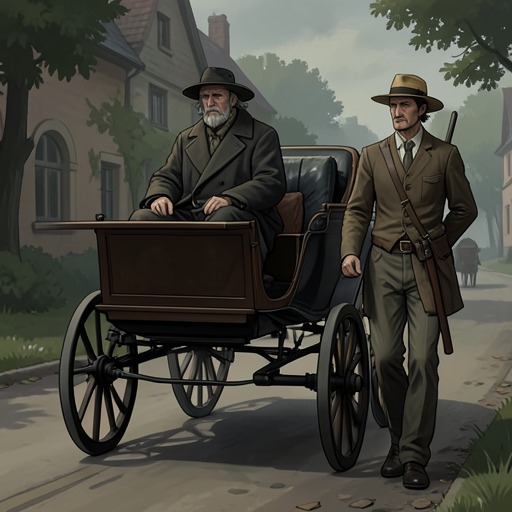
After paying the tailor, Chichikov leaves town. Murazov has already departed, earlier in the day, in a tilt-waggon with Ivan Potapitch. Chichikov’s exit is not presented as a triumphant escape or a restored return to his old life. He is described as no longer the old Chichikov, but only a ruin of what he had been, like a building pulled down to make room for a new one while the architect’s plans have not arrived. The image holds change in suspension: something has been demolished, yet no replacement has been designed. His freedom secures movement away from the town, but the scene leaves his moral and personal future unresolved.